
Building A Culture of Belonging: A Conversation with Rev. Dr. HiRho Park
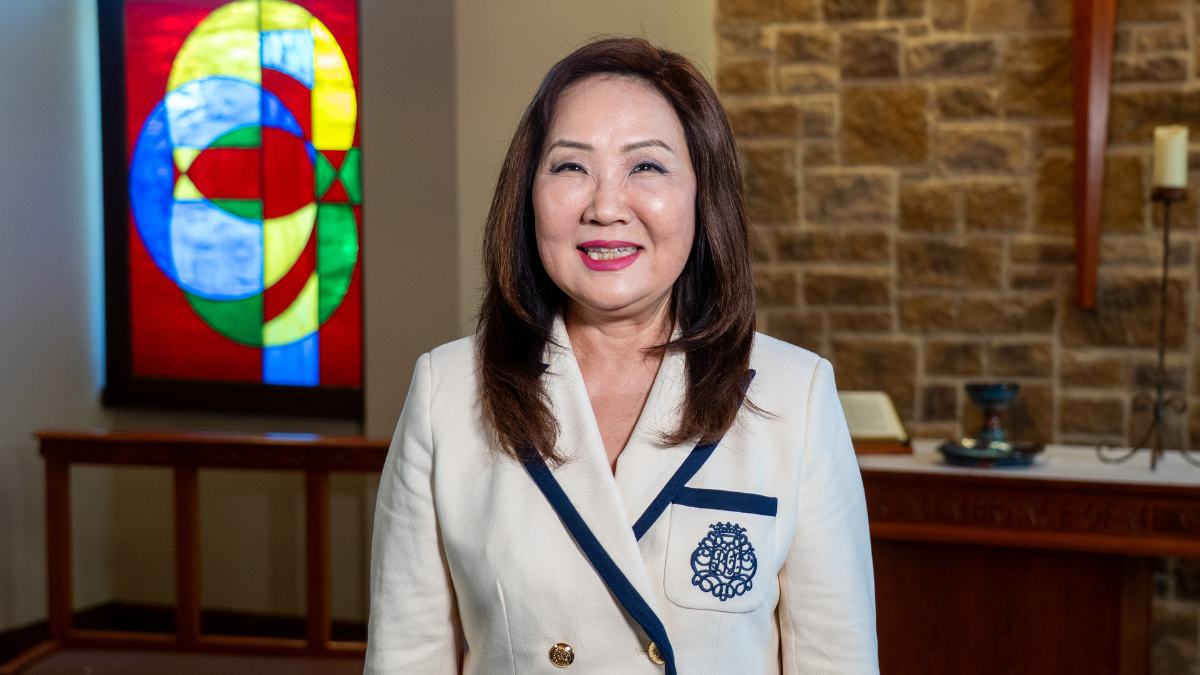
As the Horizon Texas Conference welcomes Rev. Dr. HiRho Park as its new director of belonging, inclusion and cultural engagement, we invited her to share more about the experiences that have shaped her ministry, her vision for the conference and the work ahead. In this conversation, Dr. Park reflects on faith, leadership and what it means to cultivate communities where every person experiences genuine belonging. She also offers a glimpse into the values and hope she brings as she begins this new chapter alongside Horizon Texas churches and leaders.
For those getting to know you for the first time, what would you like them to learn about you outside of your resume?
I hope people discover that I am deeply curious. I ask a lot of questions—not because I doubt people, but because I believe every person carries a story that reveals something about God. As a Korean American woman, I have often lived between cultures, languages, and expectations. That has taught me that leadership begins with listening before speaking, learning before leading. If people remember me, I hope it is not because I had the right answers, but because together we learned to ask better questions.
When you're not working, what brings you joy?
The simplest things. Sharing a meal with family and friends. Reading about emerging technologies and wondering how they might serve the church. Listening to music. Watching Korean films that remind me where I come from.
Until recently, much of my joy came from caring for my dog. Losing her reminded me that love always leaves us more vulnerable—but also more grateful. I think that's true of ministry, too.
Was there a particular moment or person that first helped you understand God's call on your life?
There was one conversation that changed my life.
While I was a student at Phillips Theological Seminary, Rev. Dr. Karen Carter encouraged me to pursue ordination. My immediate response was, "I can't. I'm a woman." She looked at me with surprise and told me there were many ordained Korean American women in the United Methodist Church. I had never met one. Until that moment, I didn't know my future was even imaginable.
I've often reflected that God's call sometimes arrives as permission to imagine a different reality. Since then, God has consistently placed mentors from many cultures and backgrounds in my life—people who trusted gifts I had not yet recognized in myself. Their faith became part of my calling.
What drew you to the Horizon Texas Conference, and what made you feel this was where God was calling you next?
The Horizon Texas Conference is asking a deeper question than, "How do we become more diverse?" It is asking, "What kind of church is God calling us to become?"
I was inspired by Bishop Saenz's vision and the conference's willingness to imagine a future where belonging is not another ministry initiative but becomes part of our culture. That is the kind of work that gives me hope.
You've served as a pastor, educator, coach, and denominational leader. Which of those experiences has most prepared you for this new role, and why?
Each role taught me something I could not have learned anywhere else.
Pastoring taught me to love people before trying to change anything. Teaching taught me that ideas matter because they shape imagination. Coaching taught me that good questions often transform people more than good advice. Denominational leadership taught me that lasting change requires both personal transformation and systemic change.
Looking back, I can see a thread running through my entire life. God kept inviting me to explore diversity, inclusion, belonging and cultural engagement long before those became common conversations. This is not simply my profession. It has become my vocation.
Your title includes the words 'Belonging,' 'Inclusion,' and 'Cultural Engagement.' What do each of those words mean, and why do they matter for the church today?
I think of these words as a journey rather than a checklist.
Diversity asks, "Who is here?"
Equity asks, "Does everyone have a genuine opportunity to flourish?"
Inclusion asks, "Whose voice helps shape what we become?"
Belonging asks the deepest question: "Does anyone feel they must hide part of themselves in order to be loved?"
Cultural engagement is the spiritual discipline of allowing another person's story to enlarge our understanding of God, our neighbors, and ourselves.
The church is not called simply to proclaim God's grace. We are called to become a community where people can actually experience it.
Belonging is not merely the feeling of being welcomed. It is the experience of discovering that your presence changes the community for the better.
Belonging is not the replacement for diversity or inclusion. It is their fulfillment.
What do you hope local churches will experience as they engage with this ministry?
I hope churches discover that belonging is not about agreeing more; it is about loving more deeply. When trust grows, fear loses its grip. When people truly know one another, the Holy Spirit often does something we could never have planned.
I also hope churches remember that this is God's mission, not ours. We are not building our kingdom; we are participating in God's kin-dom. God's kin-dom rarely begins with grand strategies. More often, it begins with one faithful act of presence.
If every Horizon Texas church could take one meaningful step toward becoming a place where everyone truly belongs, what would you encourage them to do?
See the people around you not as strangers to welcome, but as neighbors God has already entrusted to your care. Instead of asking, "How do we attract more people?" ask, "Whose story have we never taken time to hear?" The church changes not when it finds better strategies, but when it learns to listen differently.
What's a book, Scripture, or spiritual practice you return to when you need wisdom?
I return often to Micah 6:8 because it refuses to let justice, kindness, and humility become competitors. Justice without kindness becomes harsh. Kindness without justice becomes sentimental. Humility keeps both rooted in God's grace.
Each morning before I start the day, I offer the day back to God: "Help me see people as You see them, love them as You love them, and forgive them as You have forgiven me." It reminds me that ministry begins with God's heart before it begins with my plans.
As we begin this new chapter together, what blessing or prayer would you offer to the people of the Horizon Texas Conference?
My prayer is that we become known not simply for what we believe, but for the way people experience Christ among us.
May our churches become places where strangers become neighbors, neighbors become family, and together we discover that wherever we go, God's grace has already been there before us.
God is already at work before we arrive. Our task is to notice, listen, and join what God is doing.