
Beyond the Church Walls: Sacred Conversations Over a Pint
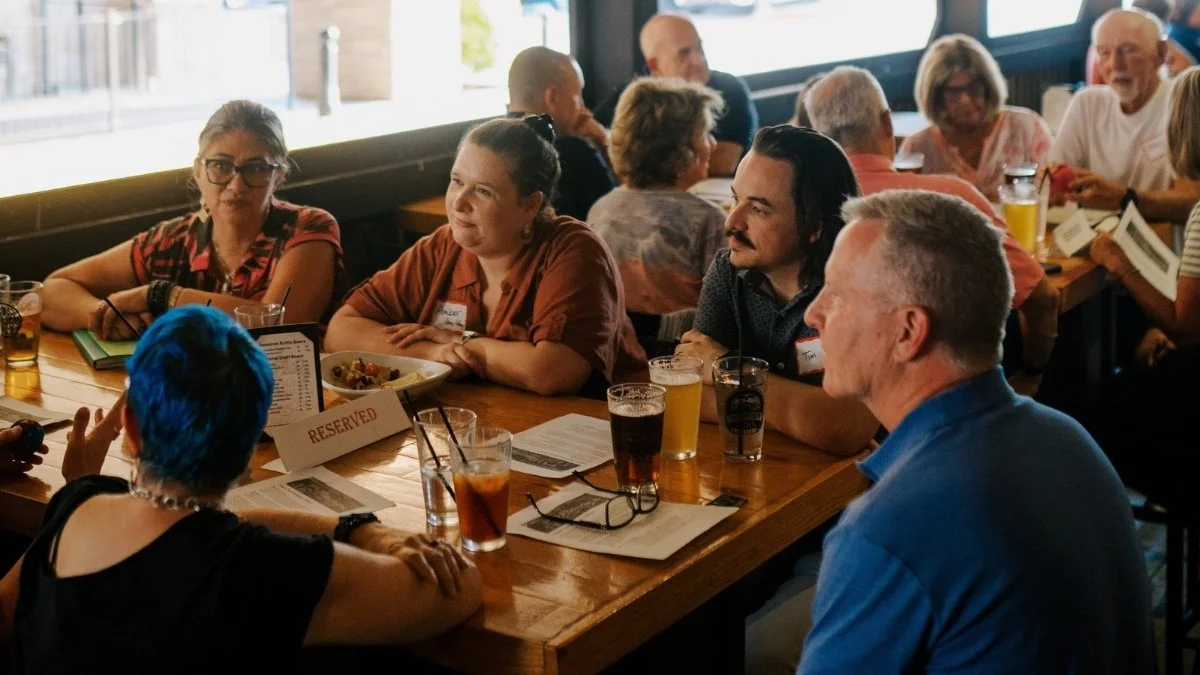
For some, reaching the community means inviting people through the doors. For others, it means walking out those doors and meeting people where they already are.
Across the Horizon Texas Conference, churches are finding creative ways to build relationships beyond traditional church spaces. At Keller United Methodist Church and Grace Avenue United Methodist Church in Frisco, that means gathering around tables at local pubs and breweries for conversations about Scripture, faith and life. The settings may be informal, but the connections are often anything but.
At Grace Avenue UMC, Seekers & Skeptics creates space for honest questions, spiritual exploration and inclusive belonging, particularly for people who may not feel at home in traditional church settings. Its monthly Pub Theology gathering meets at a neighborhood pub on the second Monday of each month. Participants often arrive early for food and drinks and stay well beyond the scheduled hour, gathering around tables to explore a different theological or spiritual question.
Recent conversations have included questions about hell, “God as Mother” and the inspiration of Scripture. Participants receive a short handout with five questions, but there is no expectation that they work through them in order, or even answer all of them. The questions are simply intended to spark conversation and allow each table to follow its own curiosity.
That openness is part of what makes the gathering accessible to people with a wide range of religious beliefs and experiences. Some participants identify strongly as Christian. Others are questioning or reconstructing their faith, while some do not identify as Christian at all.
For some, Pub Theology has been their first connection to Grace Avenue. Several people who are now church members were introduced to the congregation through Seekers & Skeptics events before ever attending worship.
“At Pub Theology, you don’t have to arrive at a ‘right’ answer or even agree with the people at your table to belong in the conversation,” Amber Baker, minister of Seeker & Skeptics, explains.
That same spirit of community can be found at Keller UMC, where Bible and Brews brings church and community members together to dig deeper into the previous Sunday's sermon, share their joys and concerns, pray and enjoy one another's company, always at local pub, What’s On Tap.
The group uses the Scripture and sermon from Sunday worship as a starting point for conversation. After discussion, participants share what is happening in their lives before closing in prayer. Members often bring snacks or chip in for pizza, and the formal gathering frequently gives way to conversation well beyond the scheduled time.
Most participants are Keller UMC members, but several are not part of the church. Over the years, patrons of the bar have also joined the conversation, and not everyone who attends drinks beer. The casual environment gives people an opportunity to interact with members of the church from different worship services and groups, building relationships they might not otherwise develop. And in both churches, the ministry extends beyond the people who intentionally sit down at the table.
At Keller's Bible and Brews, the group has also found opportunities for ministry beyond its own tables. During a conversation about the Lord's Prayer, the group decided to close by praying it together. As they prayed, much of the bar became quiet, with others joining in. For Grace Avenue, during a recent Pub Theology conversation, the restaurant manager approached the group to ask what they were doing. His district manager had noticed the gathering and commented that the group seemed to be “exuding love and care for one another.” On other evenings, servers have asked whether they could take a discussion handout home with them. Employees have also approached members of the groups to ask for prayer for themselves or family members.
These moments demonstrate what can happen when churches become part of the places where people already gather, eat, work and build relationships.
Neither group requires participants to fit a particular mold before they can join the conversation. They create a spaces where people can question, disagree and explore faith without feeling pressure to arrive at the same conclusions. They hope people feel encouraged by being together, that those who encounter the group in the bar see that the church is open to everyone and that the bar's staff feel valued and appreciated.
The two ministries share a common understanding of what it means to be the church in the community. The church does not always have to wait for people to come looking for it. Sometimes, it can simply pull up a chair.